
POPMENU INDUSTRY REPORT
The Ultimate Beginner’s Guide to Digital Marketing for Restaurants
Your marketing is what decides how much of the consumer wallet your restaurant captures. But who has the time — between serving guests, answering phones, checking inventory, paying bills, managing employees and the kazillion other things that occupy the day?
Good news: it doesn’t have to be complex, it doesn’t have to cost a lot, and much of it can be automated. This guide covers all the basics with easy tips so you can hit the ground running and quickly grow your sales.
Introduction
People. Love. Restaurants.
In fact, they love them so much that they spend 40% of their monthly food budgets on restaurants.
How much of the consumer wallet a restaurant captures is greatly influenced by the strength of its marketing. But, who has the time between serving guests, answering phones, checking inventory, paying bills, managing employees and the kazillion other things that occupy the day?
The reality is 61% of restaurant owners/operators spend 3 hours or less on marketing per week; a third spend less than 1 hour, according to Popmenu research. While 1 in 4 restaurant owners/operators have a person or team dedicated to marketing, nearly half say management and staff juggle marketing along with other duties. Another 18% say they do little to no marketing at all — which translates into a whole lot of missed revenue opportunity.
Getting started
Discover Your Brand
First things first, what is a brand anyway? We’ll give you a hint: it’s not your logo, colors, menu or website. Rather, it’s all the parts that make up how people think about you. A brand has many layers and, technically, your customers are the ones who own it because they experience it. But, there are actions you can take to influence desired perception — and those actions start with answers to the following questions:
- 1
What is your restaurant’s mission?
Do you want to “serve the best tacos on the planet” or “provide a cozy home away from home” or aspire to something bigger, like “end hunger in our community?” Whatever it is, it should be the guiding force behind how you talk about your restaurant and everything you do from a marketing standpoint.
 R&D Provisions
In the case of Atlanta-based R&D Provisions, they position the restaurant as a place “where great food and technology innovation converge for a new way of dining.” In addition to providing global cuisine with a local flair, the restaurant serves as a real-time test lab for technology to benefit the greater restaurant industry.
- 2
How do you differentiate from competitors?
What features stand out? How is your dining experience completely unique or better than anywhere else? Think an unusual dish, homemade desserts as big as your head, servers who sing or joke around with you, cult classics playing while you eat, etc.
- 3
How would you describe your restaurant’s personality?
Is it bold and edgy, casual and fun, or classic and elegant? If your restaurant was a person, would it be more akin to Betty White or Lady Gaga?
- 4
What does your restaurant look like, sound like, taste like, smell like?
A restaurant is a sensuous business and you want to find the right words and images to convey what guests should expect when they dine with you. A photo of a juicy steak you can taste just by looking at it. A headline extolling the virtues of the perfect chocolate chip cookie. A video of guests salsa dancing.
 The Freakin Incan
The Freakin Incan in Roswell, GA brings authentic Peruvian street food to life through its brick-and-mortar restaurant and food truck business. Its fun and engaging brand is accentuated by beautiful dishes and cocktails that “transport your taste buds to Peru.”
- 5
What is your restaurant NOT?
Knowing what you don’t want your restaurant to be can help sharpen your vision: It’s upscale, but not formal. It’s nostalgic, but not kitschy. It’s affordable, but not cheap.
- 6
How do you want customers to feel about your restaurant?
Whether they are dining on-premise, ordering online or checking out your Instagram, how do you want them to feel when they interact with you? Funny enough, a lot of restaurants even use their restrooms to convey their brand experience.
- 7
Are there other brands you admire (inside or outside the industry)?
What do you like about those brands and the way they communicate with their customers…and how can you put your own personal spin on that?
Answering these questions will help you to zero in on the right vibe and voice to attract guests and keep them craving more.
Set SMART Goals
Now that you’ve identified your brand, it’s time to set some goals. What outcomes do you want your marketing plan to achieve?
- Generate business for a new location or concept
- Increase dine-in traffic (i.e., get more butts in seats)
- Amplify online presence and increase engagement on my website and social channels
- Drive more online orders directly from my restaurant instead of third-party delivery services
- Drive awareness of and sales from special events like happy hours, trivia nights and doggie brunches
- Sell more pre-ordered meals or meal kits for holidays
- Promote specials to drive ordering spikes
- Increase number of online reviews
- Turn more guests into regulars by generating a loyal customer base
- Curate a sense of community among followers
- Reach new clientele demographics
Keep in mind that each goal should be quantifiable and with a relatively short timeline. Start with three and keep iterating. Make sure the goals are SMART so you can check progress, shift strategies as needed and grow as you go.
- SSpecific
- MMeasurable
- AAttainable
- RRealistic
- TTime-bound
Three SMART goals in action
Here are examples of three SMART goals and corresponding tactics for a 1-month timeframe:
Increase online orders on the slowest days of the week by 20%
Send 2 SMS messages per month sharing a unique offer code to guests.
Increase engagement on Facebook and Instagram with an average of 30 engagements (likes, comments, shares) per post across social channels
Send out 2–3 social media messages per week highlighting specials, events and other news.
Generate 100 covers for Sunday brunch
Send 2 emails per month, incentivizing guests to book early.
Now for the fun part
Create and Execute a Simple Strategy
When asked to identify the most important factors that help them decide where to eat, 1,000+ consumers surveyed by Popmenu pointed to the following:
There are several channels you can use to market your restaurant — from your website, emails, SMS/texts and social media to special promotions and word of mouth. In an ideal world, you’d be making good use of all of them, but don’t try to do everything at once. Start with what feels manageable and what you think will have the most impact on your goals with a smaller amount of investment.
We’re going to discuss various marketing channels in a little more detail. As you explore with us, keep the following “must haves” for every marketing plan in mind:
Craveability
So much of effective restaurant marketing is putting photos of mouthwatering dishes and/or cocktails in front of hungry guests.
Consistency
Marketing is not a “one and done” situation. It’s important to provide a steady cadence of communications, choosing optimal days and times. We’ll get into that later.
Automation
As guests interact with your digital assets, there are easy ways to capture guest information (very important!) and automate outreach based on their preferences and behavior (equally important!).
Measurement
48% of restaurant owners/operators use data to guide marketing, which means 52% do not. Tracking the performance of each channel against your goals enables you to adjust channels or content as needed and drive greater ROI.
Make Your Website Work Extra Hard for You
It goes without saying, your website is your prime digital real estate to attract new customers. Make it easy for people to find information and keep it consistently updated with your latest restaurant news and offers. Here are examples of promotions you can run on your website to connect with guests:
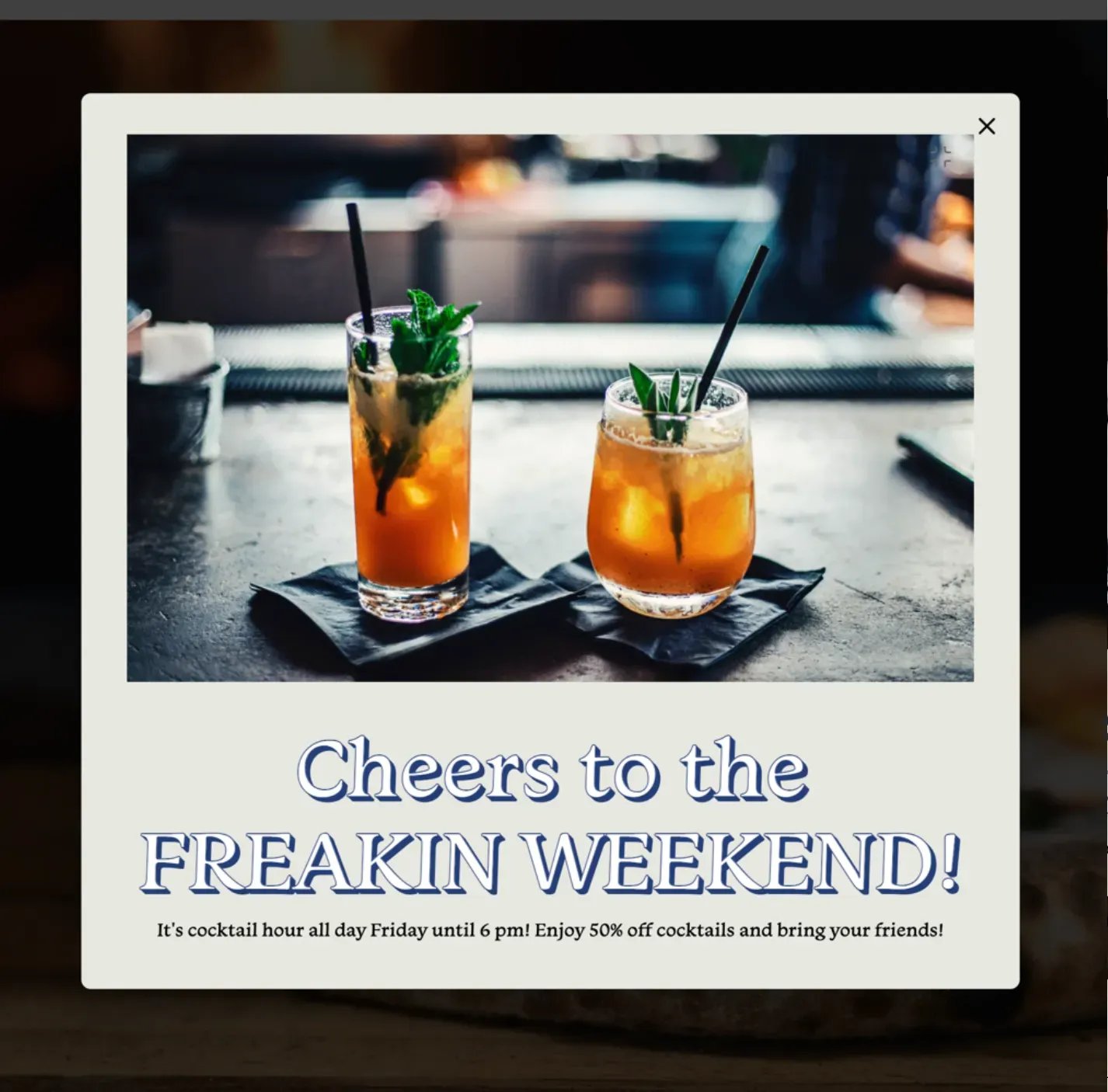
Is it Friday?
Promote Happy Hour specials with a pop-up announcement on your website every Thursday night starting at 11:59 pm. Schedule it to display on the website weekly so it’s automatically there without extra effort!
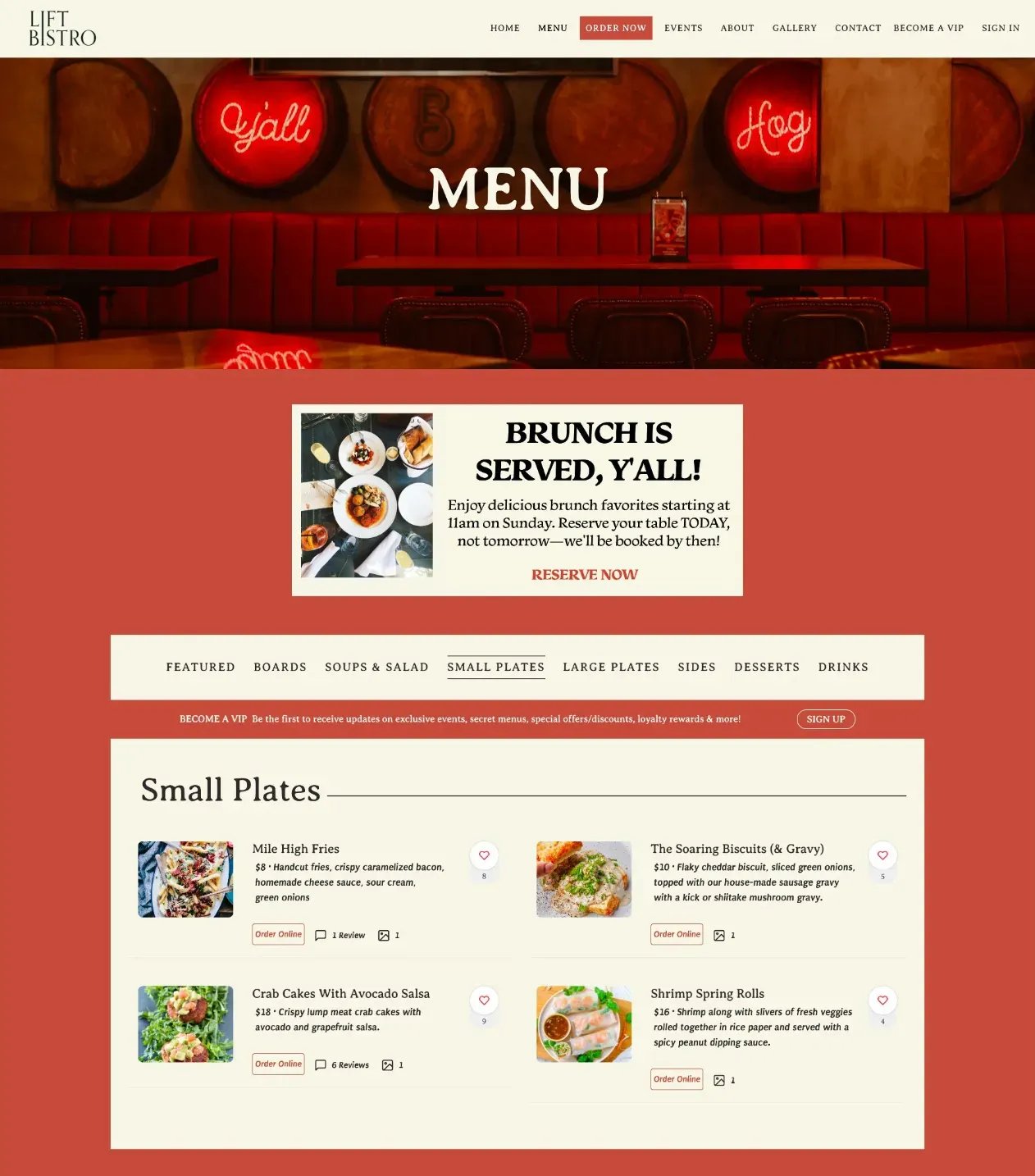
Brunch, anyone?
Display an announcement above your menu to capture the attention of folks browsing your delicious dishes. Include a clear call-to-action to make a reservation so you can be part of their weekend plans!
Events
Keep an events calendar on your website and update it with live music, trivia nights, wine tasting or anything else you’re cooking up!
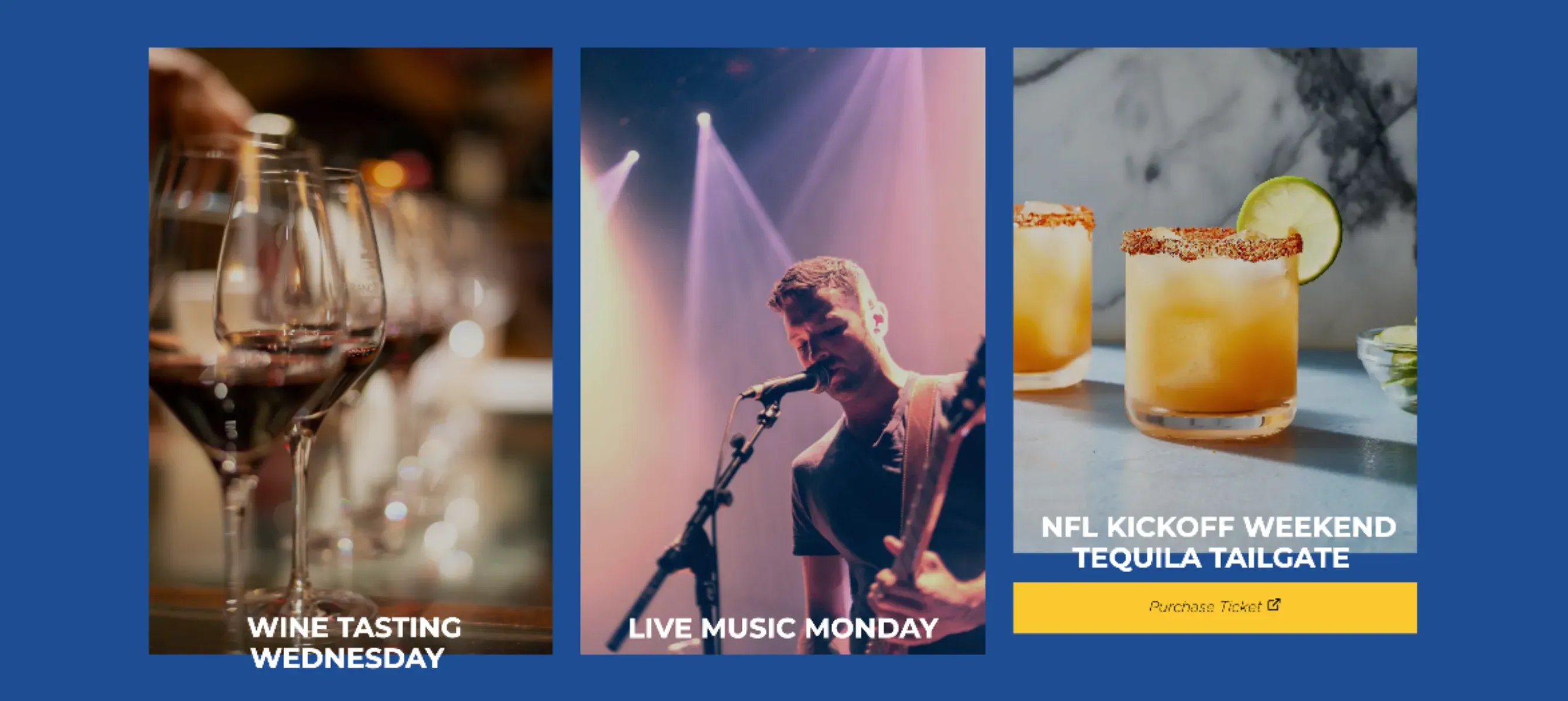
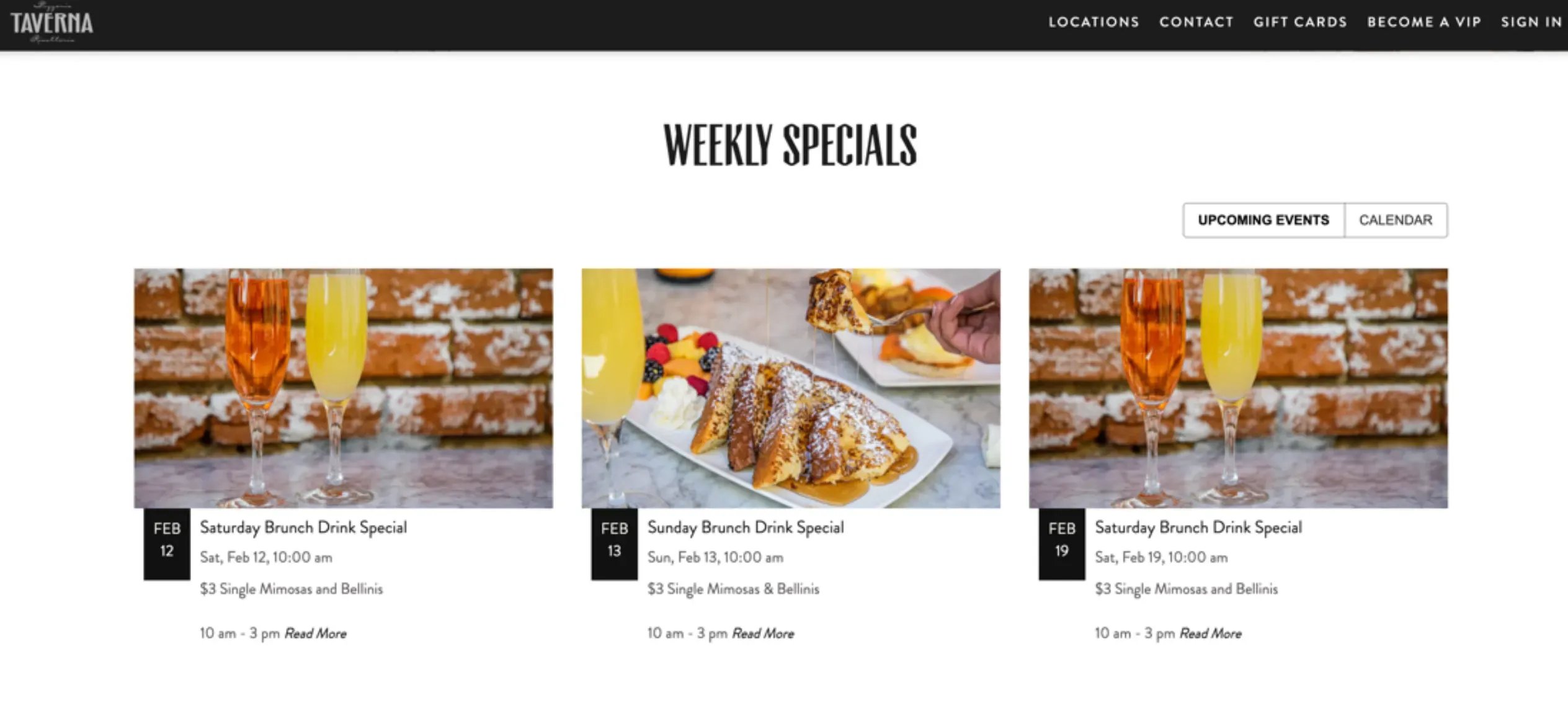
Promote weekly specials through your events page
If you don’t have special events like live music, no worries! You can make events out of Taco Tuesday and other weekly specials. Add images to your event display to make it attention-grabbing.
VIP
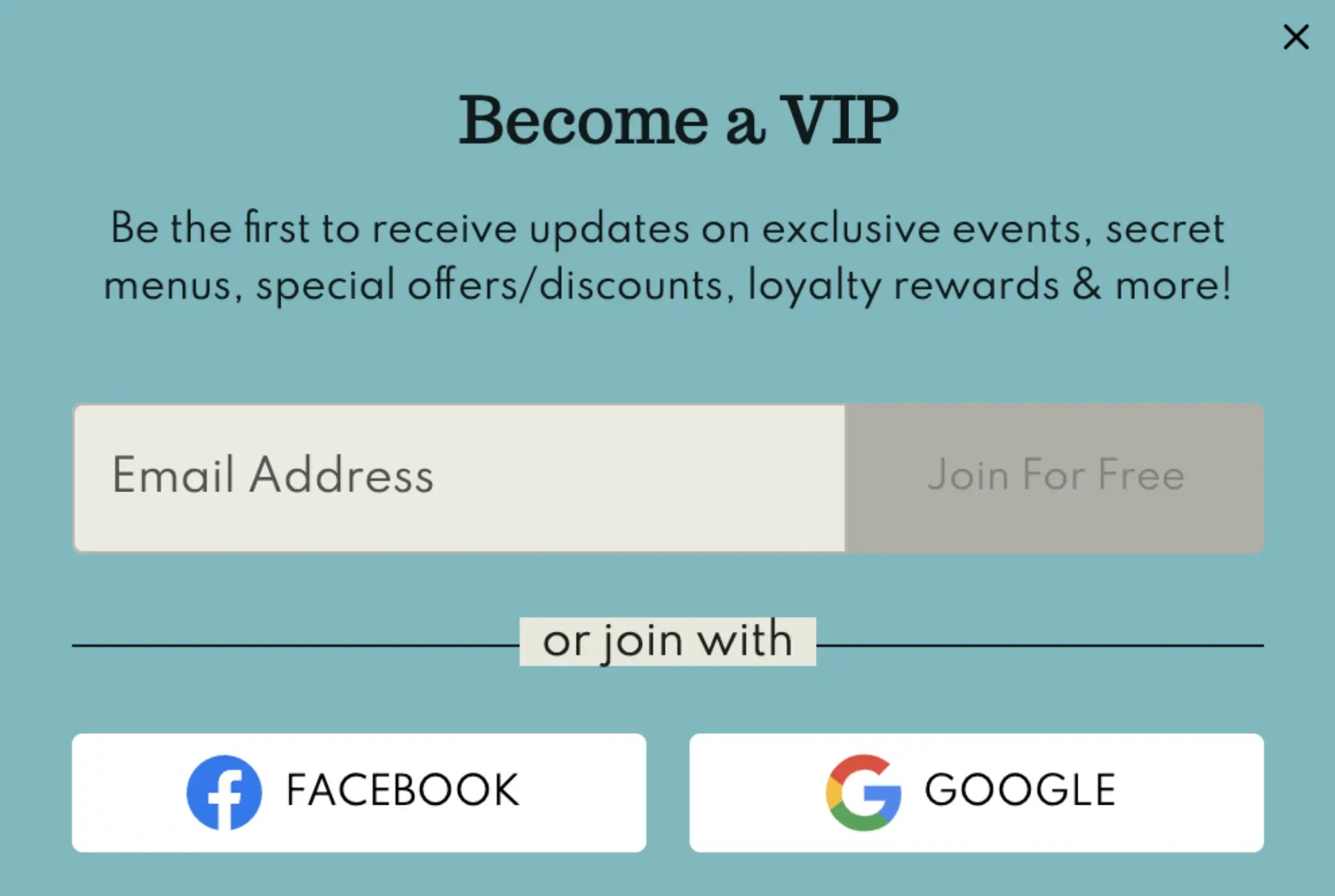
And remember, a little exclusivity can go a long way. On your home page, invite guests to become a VIP, so they can reap the rewards of special offers, advance notice of events, loyalty points and more. Outside of someone placing an order on your website, this is one of the easiest tools you can use to capture guest information and drum up more business.
Speaking of websites
A Word About SEO, Menus and Ordering
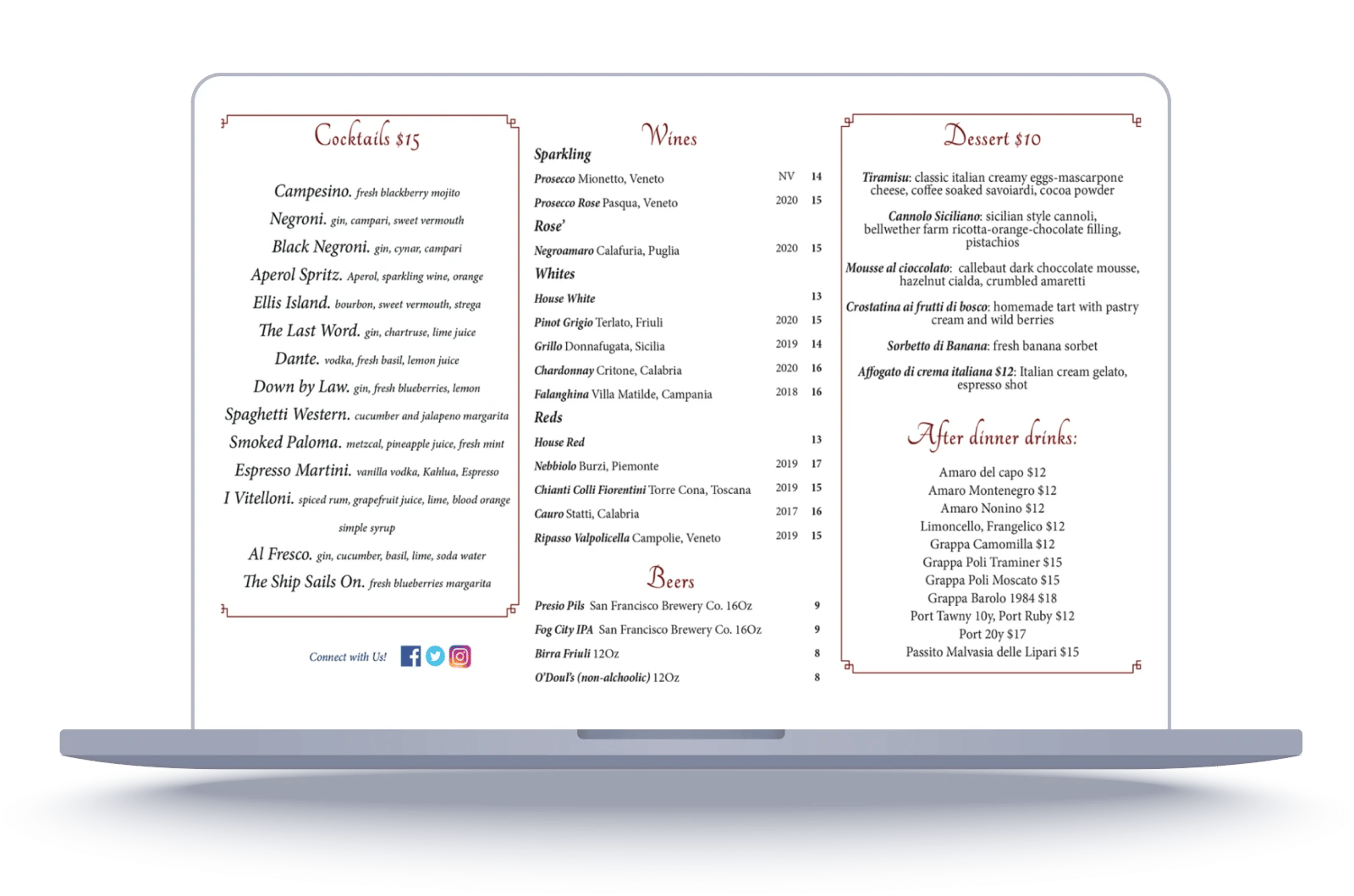
Hands down, THE most important marketing asset for a restaurant on its website — or quite frankly anywhere else — is the menu. Around 90% of a restaurant’s website traffic goes directly to the menu…and that traffic has high expectations. Marketplaces like Amazon have trained consumers to expect photos, rich descriptions and reviews when making purchasing decisions, and it’s no different when it comes to satisfying their appetites.
of a restaurant’s website traffic goes directly to the menu
of consumers will immediately move on to another restaurant if they hit a PDF menu on mobile
And there’s the issue of search engine optimization (SEO), which influences how high your restaurant ranks when consumers are searching for “restaurants near me,” “steakhouse near me,” etc. on Google. A PDF menu counts as one page of content for search engines to track, while an interactive menu can give you multiple pages and boost your rankings to page 1 of search results.
Shameless plug: Popmenu can take care of all of this for you.
To ensure your restaurant ranks high in search engine results and generates more traffic to your website, set up each dish on your menu as a separate page for Google and others to index. Make sure that each dish features a photo (dishes with photos get twice as many orders!) and an opportunity for guests to like, review and share dishes for social validation.
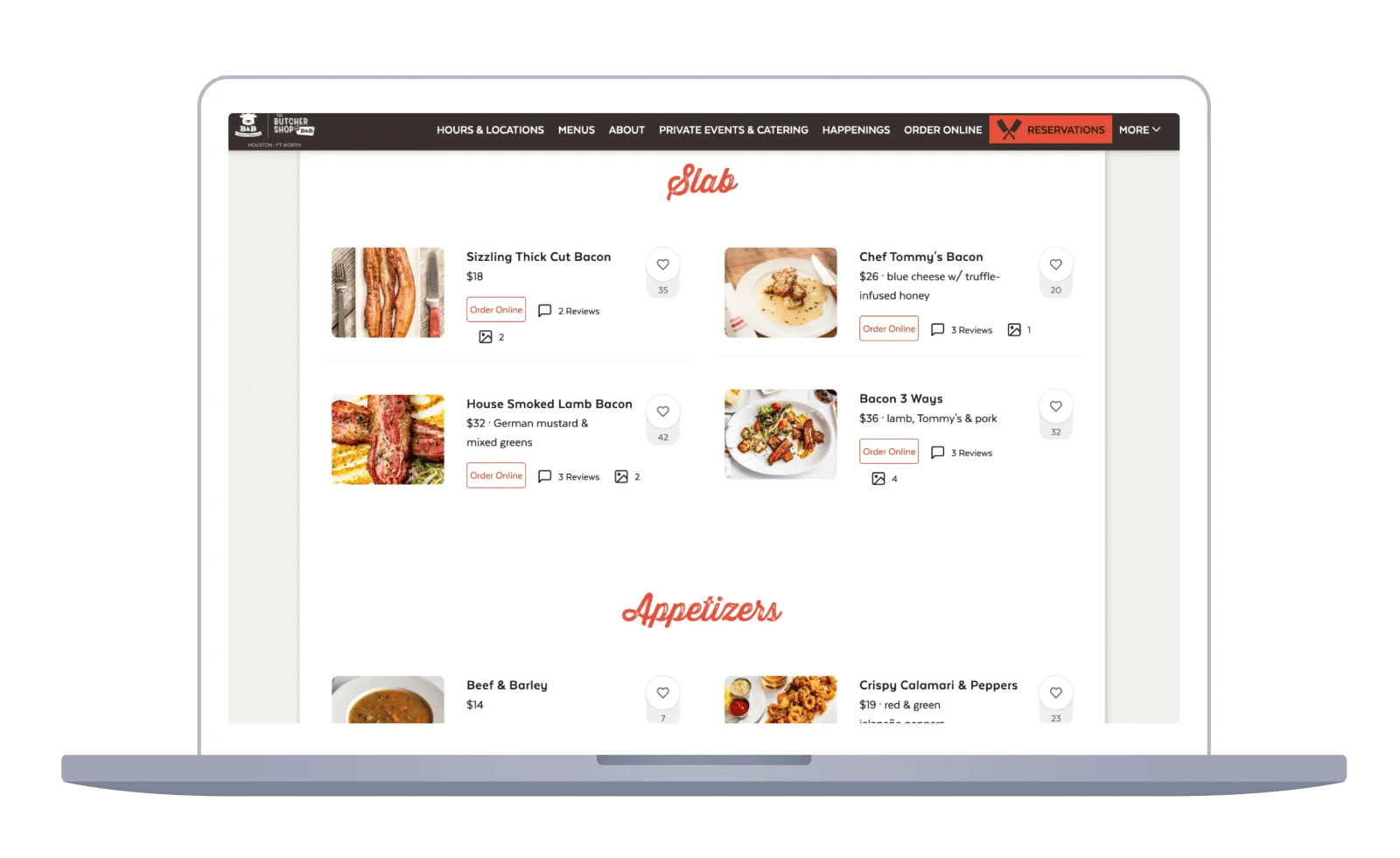

A multi-location neighborhood restaurant in Ohio known for their craft beer paired with savory wings and ribs, Winking Lizard implemented an SEO-driven approach during the pandemic. Within three months, they nearly doubled their home page traffic, generated 432 reviews and captured data from over 1,800 guests for remarketing. Not bad, right?
The Results in Just 3 Months
In addition to having an interactive menu, it’s critical to keep online ordering on your own website as much as possible. For one, 76% of guests prefer to order directly from a restaurant’s website vs. going to a third-party provider. Second, you’re able to capture customer data and get deeper insights into their preferences and behavior — enabling smarter, more lucrative remarketing campaigns that can be automated. Which brings us to our next tip.
of guests prefer to order directly from a restaurant’s website vs. a third-party provider
Automate Whenever, Wherever You Can
Think about the world of retailers and e-commerce. The moment you engage with an item, a targeted email lands in your inbox, enticing you back to your shopping cart with 15% off your first purchase or 20% off your next order. The immediacy of that email is made possible by automation — in other words, an email is triggered to send after a certain behavior is taken by the customer.
Restaurants can work the same way; every website engagement by a new or existing follower creates an opportunity to send a message that encourages an action (e.g., place an online order or make a reservation). And best of all, you don’t have to lift a finger or even think about it. Here are some examples of where automation can help foster guest relationships:
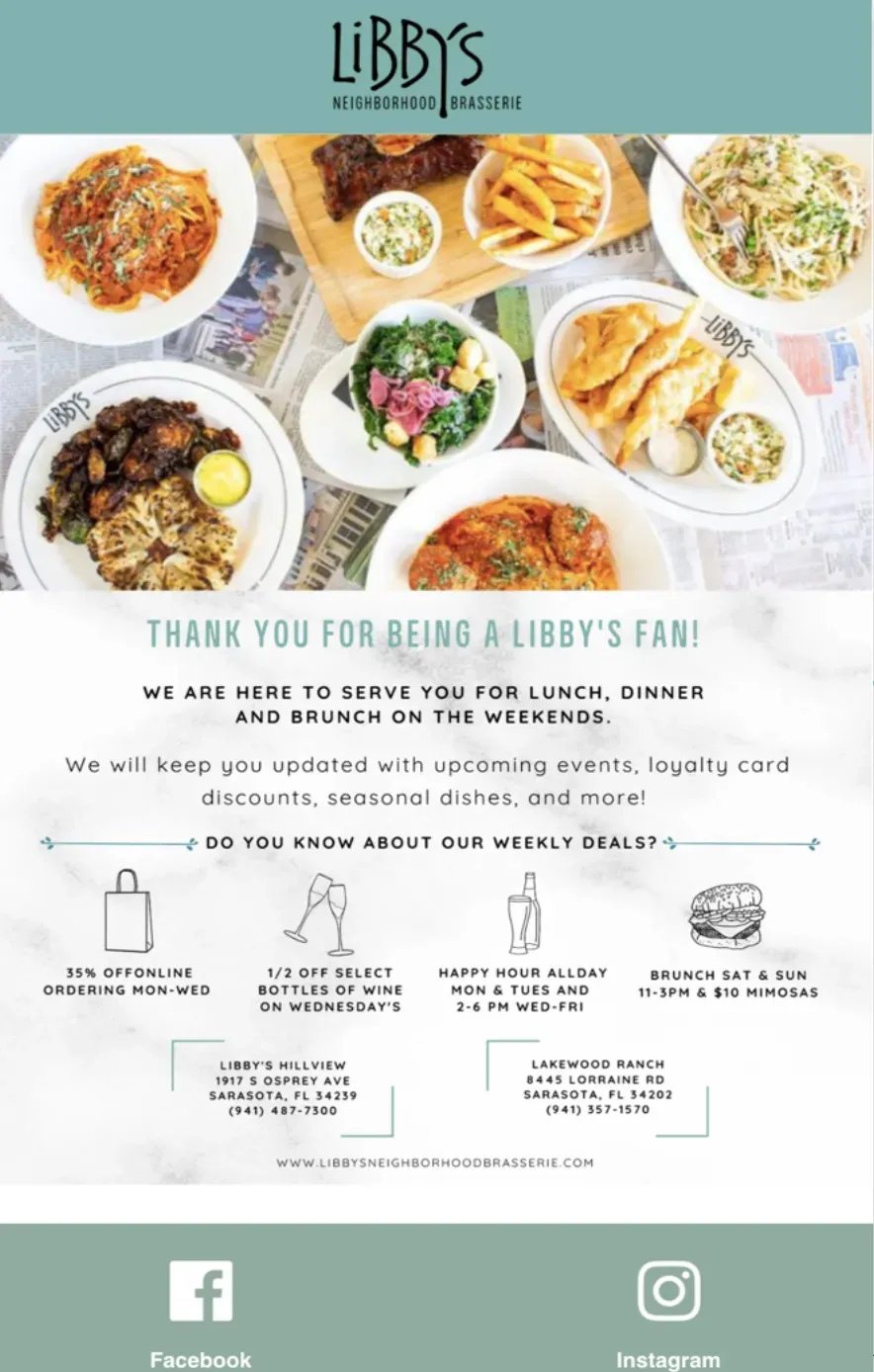
Welcome new followers
Make sure your guests are greeted with a welcome email as soon as they opt to share their contact info through your website. Attach an offer or valuable information so that guests find immediate benefit from your outreach and want to see/taste more!
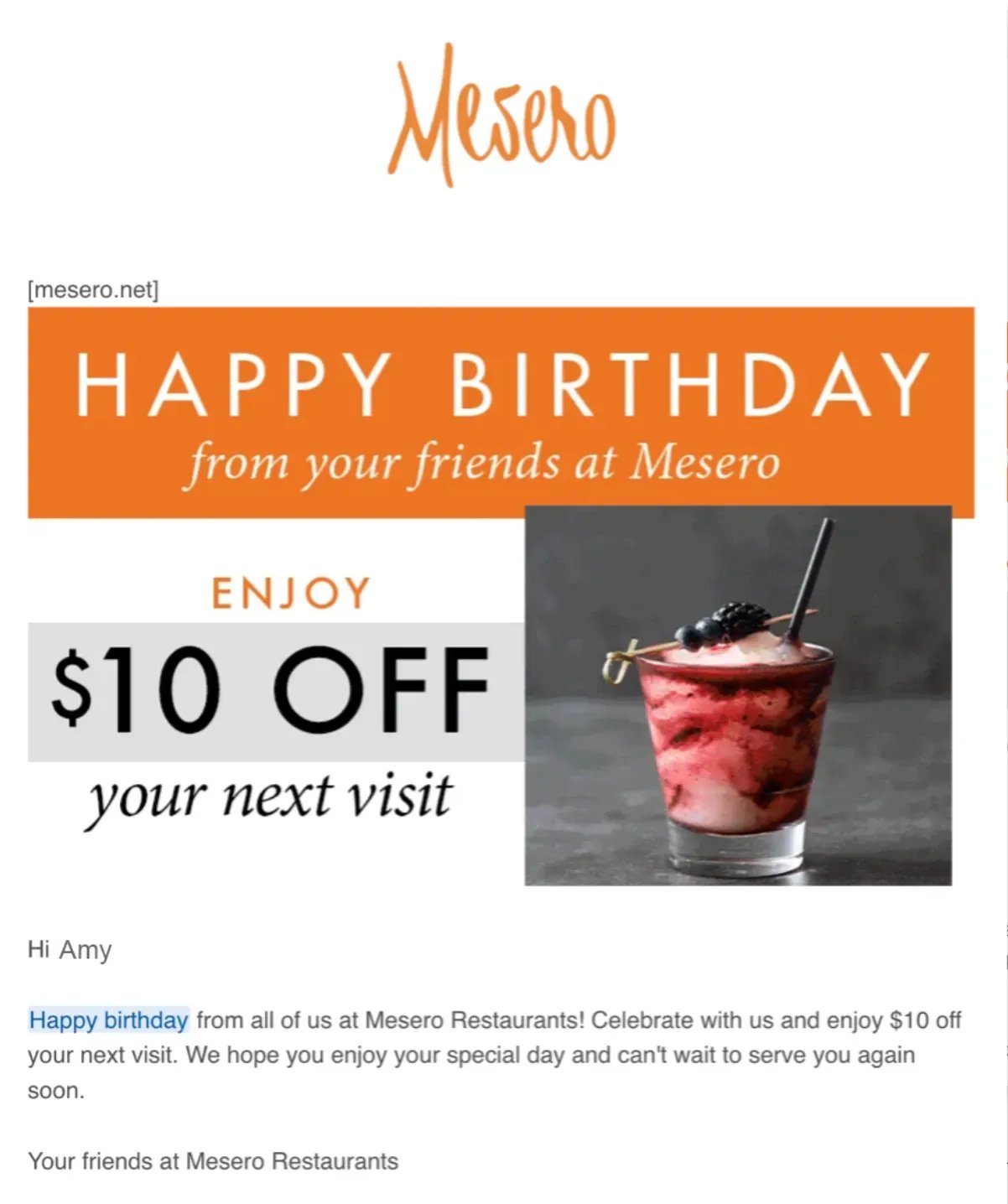
Send a Happy Birthday offer
Collect your followers’ birthday information when they sign up and extend a gift like a free dessert or appetizer when they dine in with you on their special day. Keep in mind that guests often celebrate their birthdays in groups, so give them a reason to let you host their birthday festivities.
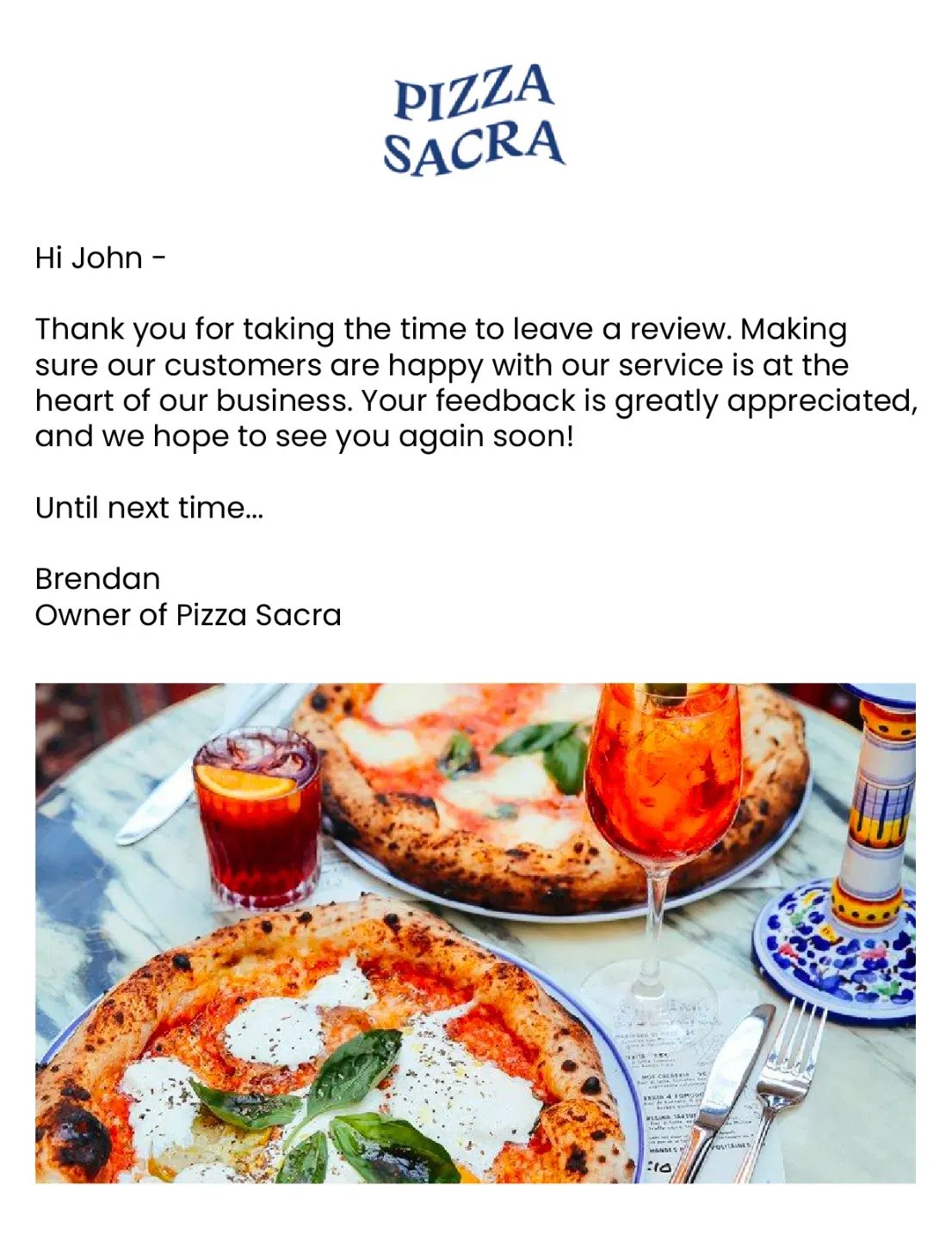
Show your gratitude
When a guest goes out of their way to provide feedback about your business, send them a Thank You. Make sure that they know that their feedback is valuable and helps you serve them better. A sweet, thoughtful message from the owner will do the trick.
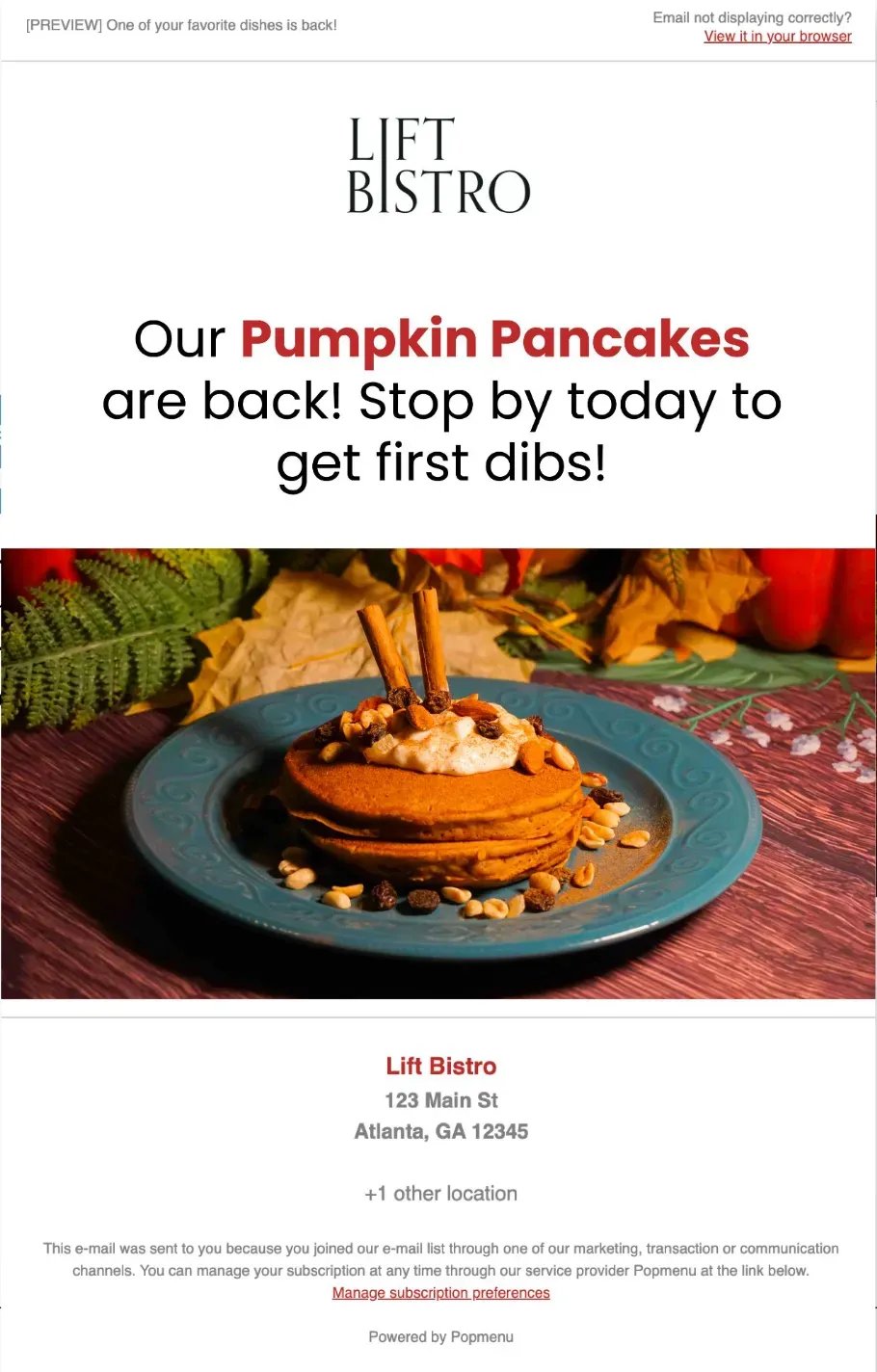
Alert guests that popular menu items have returned
Known for your special menus or seasonal dishes? Let guests know instantly that their favorites are back to inspire action.
More on Email / SMS / Text
In addition to triggers like welcome emails and birthday messages, you want to keep guests continually engaged over time. So, how often should you reach out? It all depends on what you’re offering or the news you want to share, but consider these stats from Popmenu surveys:
Consumers want to hear from their favorite eateries, yet 1 in 4 restaurant owners/operators say they send emails or SMS/texts with promotions less often than once a month — and a whopping 38% NEVER do. That creates a significant competitive edge for restaurants that choose to engage their guests on a regular basis.
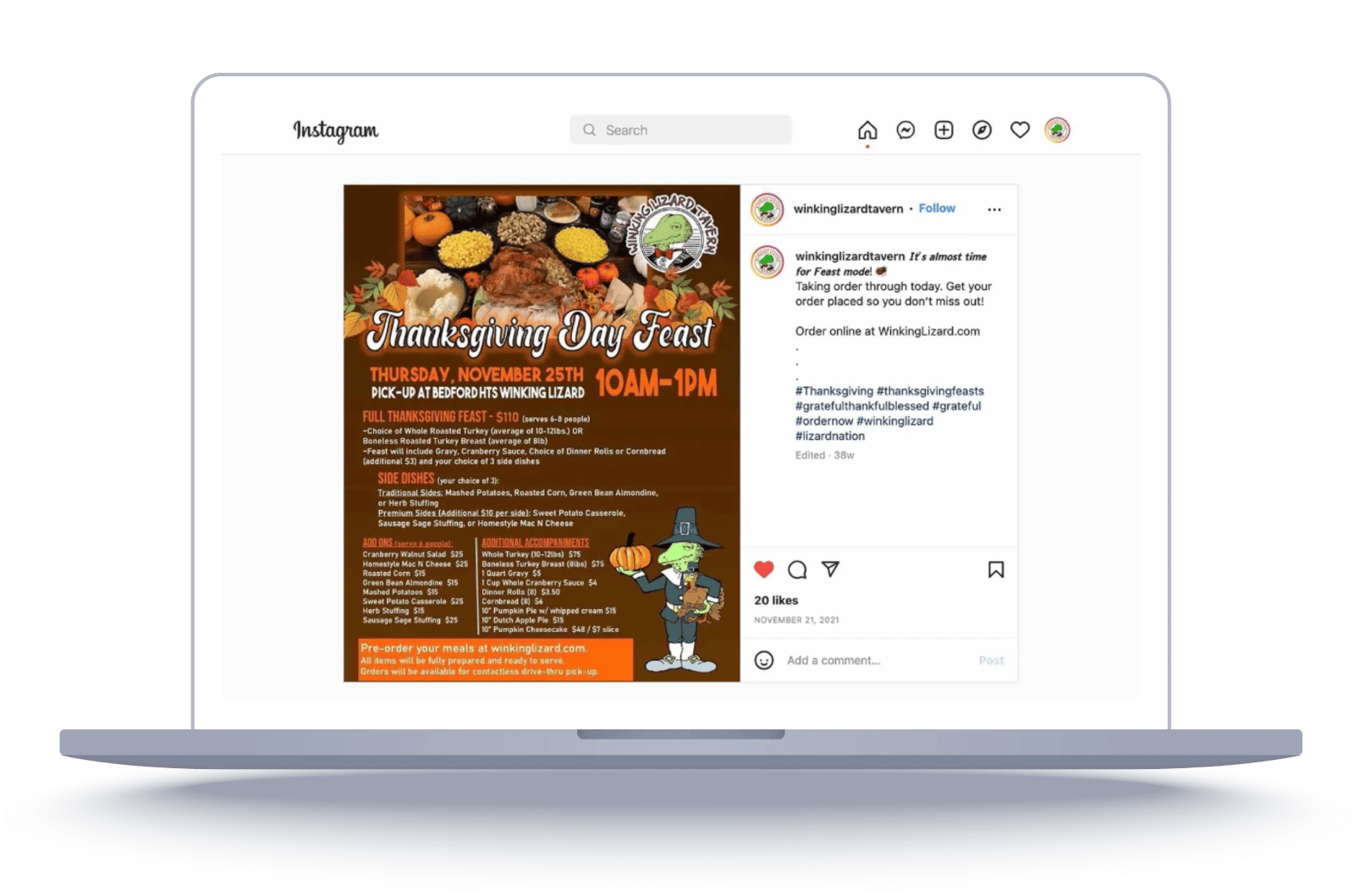
Remember Winking Lizard Tavern and the guest contacts they captured through their online menu? Their distribution list steadily grew to over 26,000 followers, and they proactively keep in touch with those guests through newsletter-style emails and other outreach to bring in more business. For example, they sent a message that pointed guests back to a special online ordering event for Thanksgiving that generated $20,000 in one day.
of consumers order takeout at least twice a week
would like to receive special offers from restaurants at least once a week
Should you send an email or SMS?
Both can be effective ways to reach guests — especially when the message generates immediate perks — but SMS outreach tends to significantly outperform email in open rate (98% for SMS vs. 36% for email) and response time (90 seconds for SMS vs. 90 minutes for email). What’s more, research shows that once a consumer joins a restaurant’s SMS program, guest spend increases by 23%, and SMS subscribers visit restaurants 44% more frequently than non-subscribers.
SMS open rate — vs. 36% for email, nearly 5× higher
of SMS messages are opened within 3 minutes of receipt
SMS response rate — vs. 6% for email
jump in guest spend once a consumer joins a restaurant’s SMS program
In terms of frequency, you ideally want to send one SMS message per week with a very intentional call to action like: “Half-price apps from 4:00 to 6:00” or “Cool off with our signature cocktails on the patio.” For email marketing, the rule of thumb is 2 to 4 per month depending on the quality and relevance of the content you’re sharing.
Either way, make sure your communication features drool-worthy photos. Sometimes all it takes to bring a guest through the door is a small reminder of the deliciousness you offer.
Grow Your Social Media Followers & Engagement
If you ever wondered whether social media is a powerful tool in your customer acquisition arsenal, try this stat on for size: 73% of consumers are more likely to visit a restaurant if they see a special promotion on social channels, according to Popmenu research.
More than half of consumers follow restaurants on social media, and they’re looking for a mix of content to make their dining decision. What do they say they want to see?
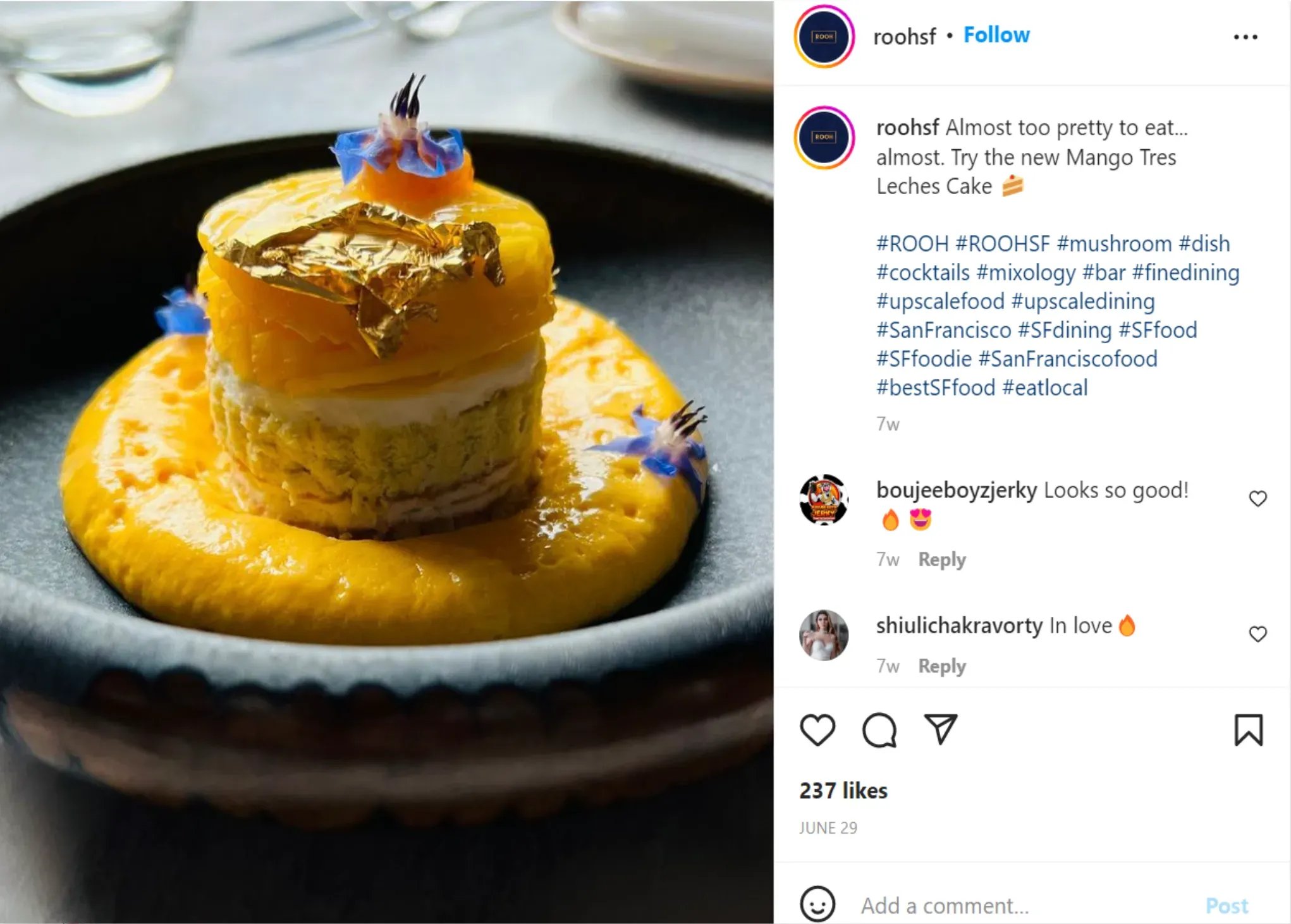
 @roohsf
ROOH is an urban, progressive Indian restaurant nestled in the heart of the San Francisco Bay Area. ROOH uses social media marketing to build brand awareness and leaves no feature of Instagram behind — which has helped them build a following of over 18,000 and growing. In addition to striking photos of dishes and cocktails, they consistently share stories and reels and actively engage with customers through DMs and comments.
In one reel, ROOH partnered with a local food influencer to promote their most popular dishes and cocktails and gained over 13,700 views from both current and potential customers.
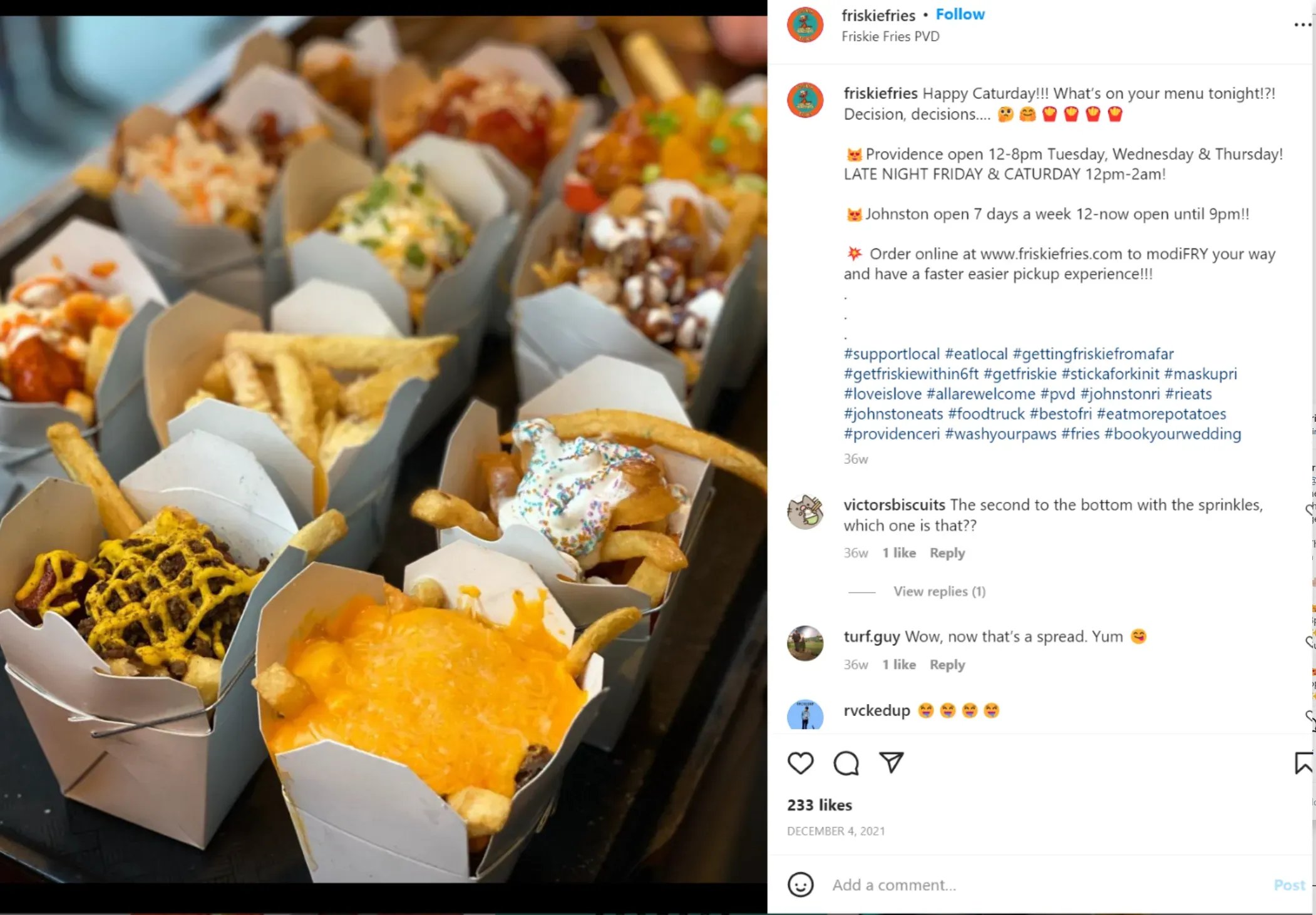
Friskie Fries, known for the crispiest, friskiest fries in Rhode Island, is another great example. With over 15,000 loyal followers (AKA Friskettes), their focus on local community support, positivity and inclusivity (on top of tasty, fun food) draws continued engagement. In addition to professional photos, cheeky graphics and witty puns, they also leverage user-generated content to capture the customer experience.
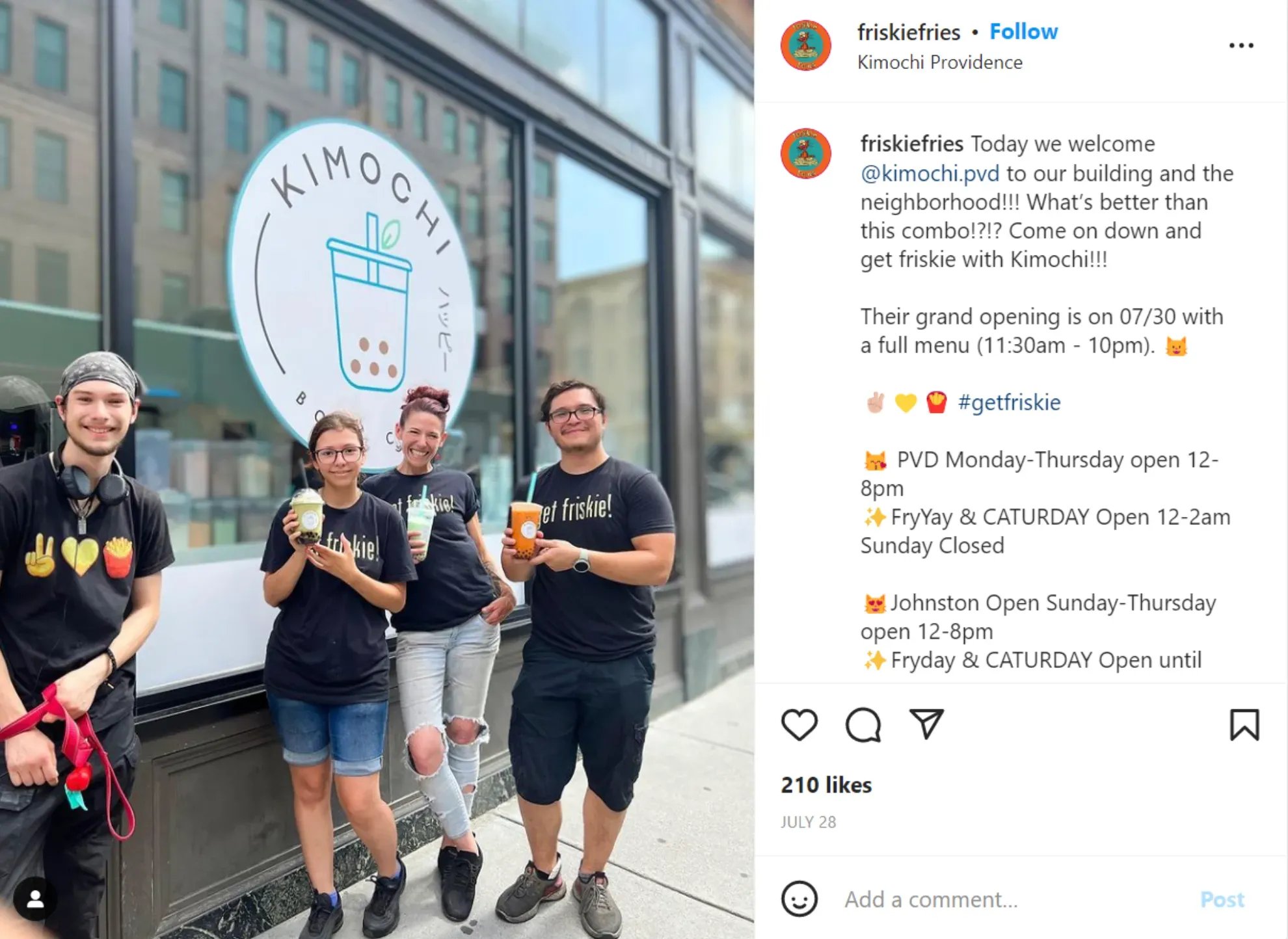
Social posts can help bring in new business, keep your brand top-of-mind and cultivate community engagement. Channels and frequency often come down to resources, but most restaurants choose to post on Instagram and/or Facebook. Thirty-six percent of restaurant owners/operators say they post on social media every day, while 41% post 1 to 3 days per week. Popmenu research found that followers are more engaged on weekdays — aim for posts to go out on weekdays unless important information needs to be shared on a weekend for a specific reason.
Measure Sweet Success
Now for the million dollar question: are your marketing efforts paying off? One key practice to keep in mind when measuring: context. Be sure to capture the “before” picture so you can accurately measure the impact of your efforts.
Website Traffic Metrics
Google Analytics reports are a great resource to help you understand more about your guests’ online behaviors:
- How many views does your website receive daily?
- Is there a spike on a certain day of the week and why? Maybe a popular happy hour or new press mention?
- Where does your traffic come from?
- What device(s) are your website visitors using to find you?
- How long are your guests staying on your website?
Social Media Metrics
In addition to tracking follower growth over time, see how much engagement you’re receiving on each social channel:
- How many likes and shares were generated?
- How many comments were made — and are they positive, negative or neutral?
- How many people clicked on special offers or signed up for special events?
- Which posts are top-performing and which fell short? What can be replicated, adjusted or ixnayed altogether?
Email Marketing Metrics
Taking a closer look at email marketing, there are three standard benchmarks you can track:
- Open rate — how many people open an email.
- Click-through rate — how many people click and take the next best action (place an order, make a reservation, etc.).
- Unsubscribe rate — how many people opt out of receiving communication from you.
Ordering Metrics
If your goals are to increase ordering volume, get a sense of your typical volume before you start. Some questions to think about:
- Is your promotion leading to a larger check average / stronger return on investment?
- How many orders come to you directly?
- How many come through third-party delivery services? What is the slowest day of the week?
- Does your audience respond well to offers, discounts and promotions?
- What is the most popular dish your guests order online?
Dine In + POS Reporting
Your POS system helps you understand your patrons and their purchase patterns. Metrics to pay attention to:
- What days of the week have slower dine-in traffic?
- What time(s) of the day drive the most revenue?
- Are guests coming to celebrate with you? If so, what holiday(s) or events?
- Is there a way to capture emails and phone numbers for future marketing?
According to HubSpot, the average restaurant-industry email benchmarks are:
average email open rate
average click-through rate
average unsubscribe rate
As you review different metrics, make sure to check progress on meeting goals. Did you meet them or, better yet, exceed them? What worked, what didn’t and why? Continue to iterate and tailor your approach and messaging. Marketing is a constant learning process, and every interaction with guests will help you find the right strategy to drive desired outcomes.
About Popmenu
As a leader in restaurant technology, Popmenu is on a mission to make profitable growth easy for all restaurants. Digital marketing, online ordering, and on-premise technologies headline a powerful product suite infused with artificial intelligence (AI), automation, and deep data on guest preferences. The company consolidates tools needed to engage guests, serving as a digital control center for more than 10,000 independent restaurants and hospitality groups in the US, UK, and Canada.
Win bigger with Popmenu.
The form didn't load.
Open the form in a new tab →