
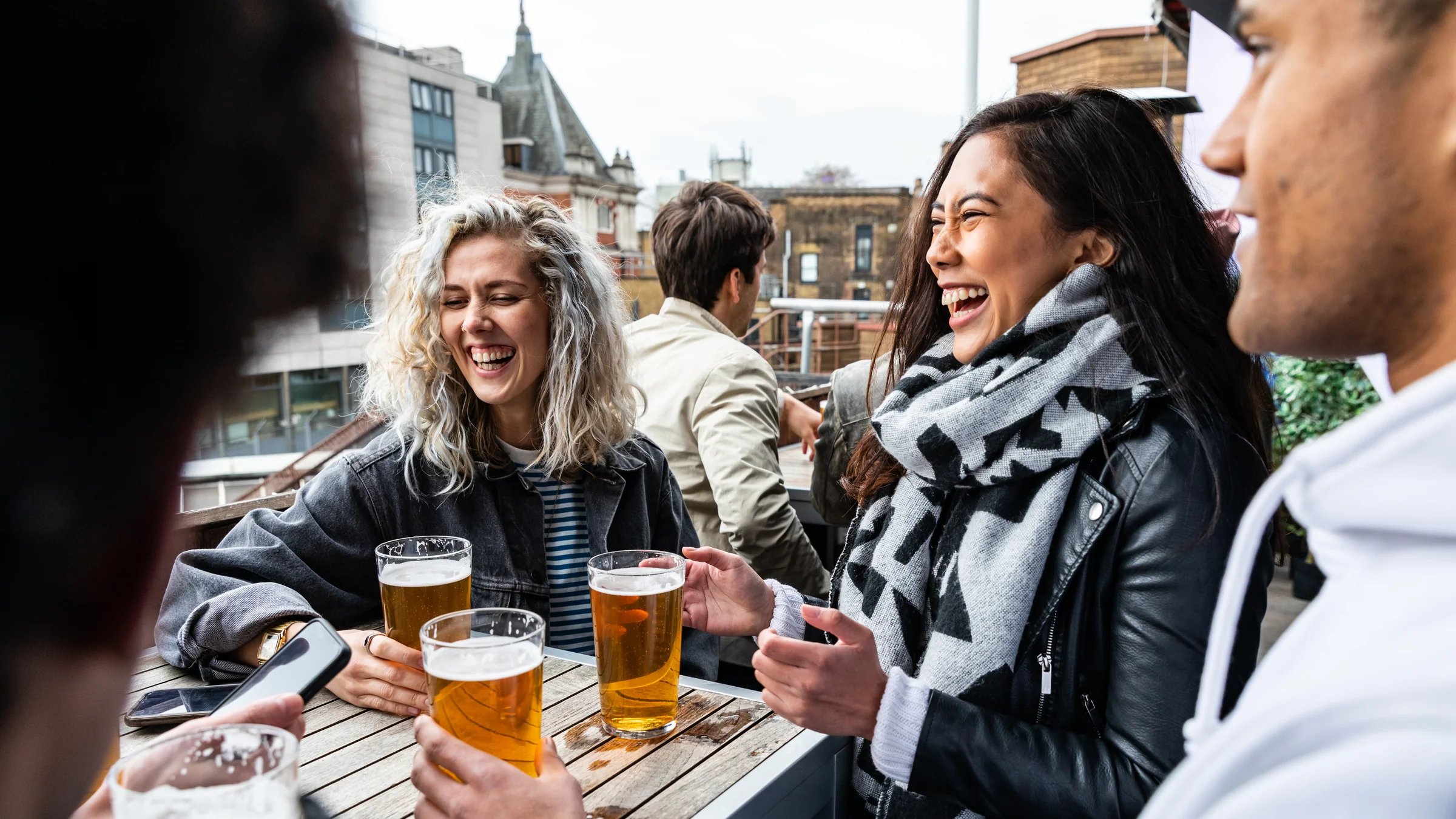
Household budgets are under pressure. That’s not news. But what it means for your restaurant and what you can actually do about it are worth paying attention to as competition for wallets intensifies.
Popmenu recently surveyed 600 UK consumers to find out how dining habits are shifting, what influences their choices, and how restaurants can win more business at every stage of the guest journey—from the first online search to the next visit. What we found is both a warning and an opportunity.
The reality check: most are spending less
Nearly two-thirds of UK consumers dine out or order in at least once a week, spending a quarter of their monthly food budgets on restaurants, on average. The demand is still there, but 69% say they’re spending less on restaurants this year compared to last year.
Dinner is taking the biggest hit, with 51% of cost-conscious consumers cutting back on outsourcing evening meals. Lunch and late-night dining are also seeing a notable impact.
Guests are making every pound count. They want to know exactly what they’re getting and are more likely to choose restaurants that feature photos or videos of their dishes online. They’re also looking for special deals, prefer easy, tech-enabled experiences, and gravitate toward restaurants that reward their loyalty and personalise messages to them.
The good news? Knowing this is half the battle. Here’s what the data says you should do to earn more sales.
Step 1: Be visible across channels
Before a guest can choose you, they have to find you. The vast majority (88%) of UK consumers start that search on Google. But there’s a number you shouldn’t ignore: 19% are now using AI tools like ChatGPT, Google Gemini or Perplexity to discover where to eat. That’s nearly 1 in 5—and it’s growing.
If your menu isn’t structured so Google and AI can read and surface it, you’re already missing out on a large share of potential customers. When each dish on your online menu is treated as its own page, you give search engines and AI more relevant content to index, increasing your chances of ranking higher and getting discovered. A static PDF menu, on the other hand, gives them just one page to consider.
It’s also important to stay loud on social media with 30% of consumers using it to make dining decisions.
Step 2: Be visual and make value obvious
One in four guests spends 30 seconds or less looking at your online menu. You have no time to waste.
The impact of photos is enormous: 89% of consumers are more likely to choose a dish when it has a photo versus plain text. Nearly 3 in 4 want to see videos of dishes, and half want reviews on individual items, not just a star rating for the restaurant as a whole.
With budgets tight, 64% of consumers are also more likely to choose a restaurant with special offers and promotions and 51% are more likely to choose a restaurant that provides loyalty rewards. If you’re concerned about margin, consider this:
66% of consumers tend to place a larger order when there is a discount.
Step 3: Make ordering effortless
More than 90% of UK consumers order restaurant food on a mobile device most often, so if your mobile experience is clunky, you’re losing sales.
Half (49%) are more likely to choose a restaurant with online ordering on its own website; 63% say they’re less likely to order if they’re pushed to a third-party site with higher fees. While delivery marketplaces can be helpful customer acquisition tools, relying on them as your primary ordering channel may be costing you more than you thought.
Consumers want zero friction when it comes to digital hospitality. Nearly two-thirds are good with restaurants using AI to make service faster and more accurate, a clear signal that a tech-forward experience is welcomed.
Step 4: Stay in touch
The guest journey doesn’t end when someone leaves your restaurant: 3 in 4 consumers are willing to share their contact details in exchange for promotions and news—which means most of your guests are open to hearing from you, if you do it right.
“Right” means often: 47% want to hear from restaurants they like at least once a week and 51% expect those messages to feel personal, not generic.
The appetite for restaurant apps is also real: 78% of consumers say they would sign up for a mobile app to place orders and earn rewards.
The bottom line
UK consumers are still dining out. They’re just choosing more carefully. The restaurants that win are the ones that show up where guests are searching, give them a reason to click, make ordering easy, and keep the conversation going after every visit. None of that requires a huge budget. It requires the right tools and a consistent commitment to the guest experience.
Read the full report here.