POPMENU INDUSTRY REPORT
What Restaurant Guests Want Right Now
Let’s face it: winning guests is getting tougher by the day. Financially stressed consumers are mindful of every dollar spent—chasing deals and choosing venues more carefully than ever before.
The good news? The factors that drive dining decisions are knowable, and most of them are within your control.
This report draws on six months of research on 3,000 U.S. consumers to uncover how dining habits are changing, what guests value most, how much they’re tipping, and what they expect from restaurants today. More importantly, it points to the actions operators can take now to capture more business at every step of the guest journey, from the moment a guest starts searching for a place to eat online to when they order and decide whether to return.
Guest Spending
The battle for the check is real
Consumers are spending an average of $100 per week at restaurants—about 30% of their total monthly food budget. That’s up from $90 in February 2026 but still trailing $115 in June 2025.
avg. weekly restaurant spend (midyear 2026)
avg. weekly spend in February 2026
avg. weekly spend in June 2025
of monthly food budget going to restaurants
A majority of consumers (67%) say they’re spending less on restaurants this year compared to last year. That means two out of every three guests walking through your door have made at least one decision to spend less. Here’s how they’re doing it:
Which dayparts feel the pinch most
When consumers cut back, dinner bears the brunt—but no daypart is immune.
Where guests eat most often
When it comes to dining choices, QSRs and casual restaurants are in the lead with 58% of consumers frequenting those establishments.
Consumers are spending intentionally, not reluctantly. They still want to eat out—they’re just more deliberate about where their money goes. That creates a real opportunity for the restaurants willing to show up fully: be visible when guests are searching, look great online, make ordering easy, and treat every guest like a VIP. The operators who nail those basics right now are the ones who will build loyalty that lasts long past this period of belt-tightening.

The Guest Journey
What makes a guest select your restaurant?
Every restaurant is competing for a guest’s attention before they ever set foot in the door. Here’s what tips the scales for each step of the guest journey.
Step 1 of 4
Guest starts searching.
Be visible.
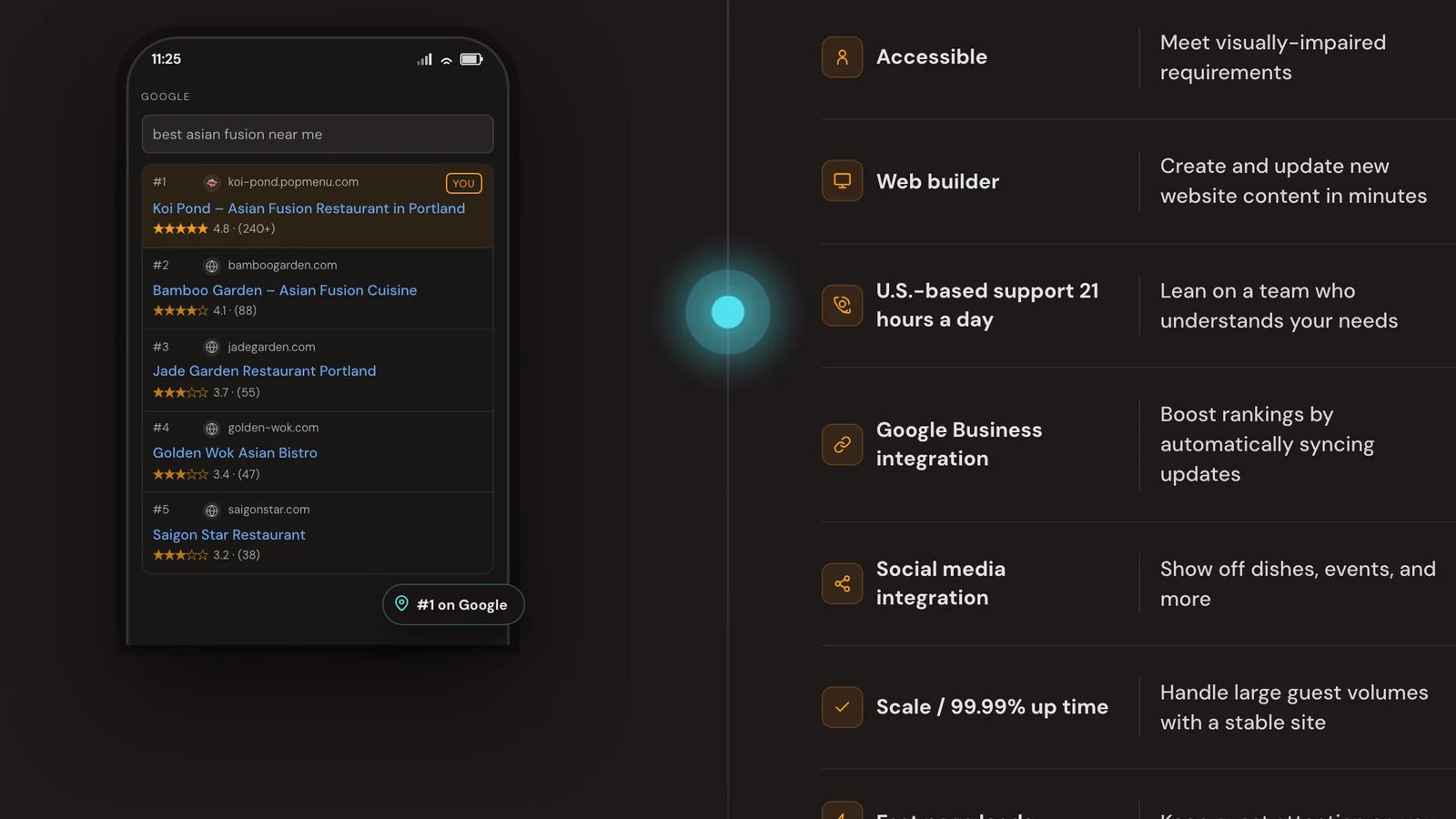
The journey to your restaurant starts online—usually on Google. But the search landscape is shifting fast, and AI is carving out a meaningful slice of discovery.
look for restaurants on Google or other search engines
now use AI (e.g., Gemini, ChatGPT) to find restaurants
search for restaurants by price range
A majority (60%) search with general terms; 58% search for a specific dish or cuisine, while 1 in 4 search by price range. That means specific menu items should be as easily findable as your homepage is. And storytelling punches above its weight: 45% are more likely to choose a restaurant after learning how it got started.
In addition to helping your business get found organically, paid ads can also lead to a quick boost in customers, with 59% of consumers stating they click on digital ads for restaurant.
Step 2 of 4
Guest compares and chooses.
Be visual.
Guests make up their minds faster than operators may realize. Nearly half (45%) spend 45 seconds or less viewing an online menu, on average; over one-third (36%) spend 30 seconds less. Your online menu is effectively a first impression, and if it’s not highly visual and interactive, you’re more likely to get lost in the scroll.
tend to skip over websites that are boring to look at (e.g., no photos, videos or reviews)
more likely to choose a restaurant with photos and reviews on its online menu over a plain text menu. The same proportion would choose videos of dishes over photos.
The message is simple: show your food. Give them the texture, the sizzle, the experience—plus nutritional info and allergens to make dining decisions easier.
Restaurants have to work a lot harder now to grab that guest’s attention. It’s very important for restaurants to give themselves every advantage possible.

Be affordable.
Restaurants that include less expensive menu items or value bundles are likely to see more orders. Running a special promotion can also be a lever for bigger orders.
more likely to choose a restaurant with affordable menu options and special deals
more likely to place a larger order if a discount is offered
I think one of our biggest challenges, at least in our area, is continuing to balance check average with just general foot traffic. We're trying to stay price conscious, while also being cost-conscious, and put out product at a price that is still appealing enough to our clientele that they're gonna come through the door.

Be accessible.
Guests say they are less likely to order from or visit a restaurant if they get voicemail: 38% will move on immediately. Every call is a sales opportunity. Whether phones are being managed by a human or by an AI assistant that can customize responses, it’s important to pick up every time.
of guests will immediately dismiss a restaurant if they don’t answer the phone
will try calling one more time before moving on
When it comes to potentially long wait times, nearly two-thirds of guests (64%) are more likely to choose a restaurant if they can add themselves to a digital waitlist ahead of time.
Step 3 of 4
Guest orders.
Be easy to do business with.
Friction kills conversion. Whether a guest is placing an order, making a reservation, or joining a waitlist, the experience needs to be seamless—and increasingly, they’re open to AI making that happen.
When it comes to online ordering, guests see third-party delivery sites as helpful for discovering new restaurants—but the vast majority prefer ordering directly from a restaurant’s own website.
of guests prefer ordering directly from a restaurant’s own website.
Not surprising that more than half of guests say they’re less likely to order when they have to leave the restaurant’s website or when the process is difficult to navigate—especially on mobile.
Why they don’t order:
if I have to leave the restaurant’s website to order
if the online ordering system is clunky
if I can’t customize my order online
if ordering on my cell phone is hard
It’s important to note that expectations for an easy process also apply to large catering orders.
We have a big focus on catering. Before, I would be on the phone for 20-30 minutes taking catering orders. Now, with our website, the whole process is seamless. We make it easy for guests to figure out what they want, place their order and pay. The number of orders has increased significantly.

are comfortable with restaurants using AI for better, faster service—from answering phones and taking orders to preparing and serving food.
Step 4 of 4
Guest becomes a lifelong fan.
Be in touch.
Loyalty isn’t just a program—it’s a feeling. Guests want to know their restaurant knows them and goes that extra mile to make them feel appreciated. Nearly half of guests choose restaurants that have loyalty rewards. The majority are willing to join emails lists and adopt a restaurant’s app to receive special promotions and other news, but they expect messages to be personalized—especially for special occasions.
choose restaurants that offer a loyalty program
are willing to share their contact info to receive special offers and other news
would download a restaurant’s app
expect messages to be personalized based on their preferences
want a personalized offer for their birthday or anniversary
Staying top of mind is really important, messaging through texts, emails and social posts. I’m able to look at the return rate and see what’s working and what’s not working.

The restaurants that win will earn it.
Consumers haven’t stopped eating out—they’ve just raised the bar for what makes it worth it.
The operators who will come out ahead are the ones who show up completely: visible in search and on AI platforms, visually compelling online, affordable without sacrificing quality, frictionless to order from, and generous with recognition and personalization. That’s not a wish list—it’s a checklist.